Distribution ( Reported )
Understanding the Distribution Map
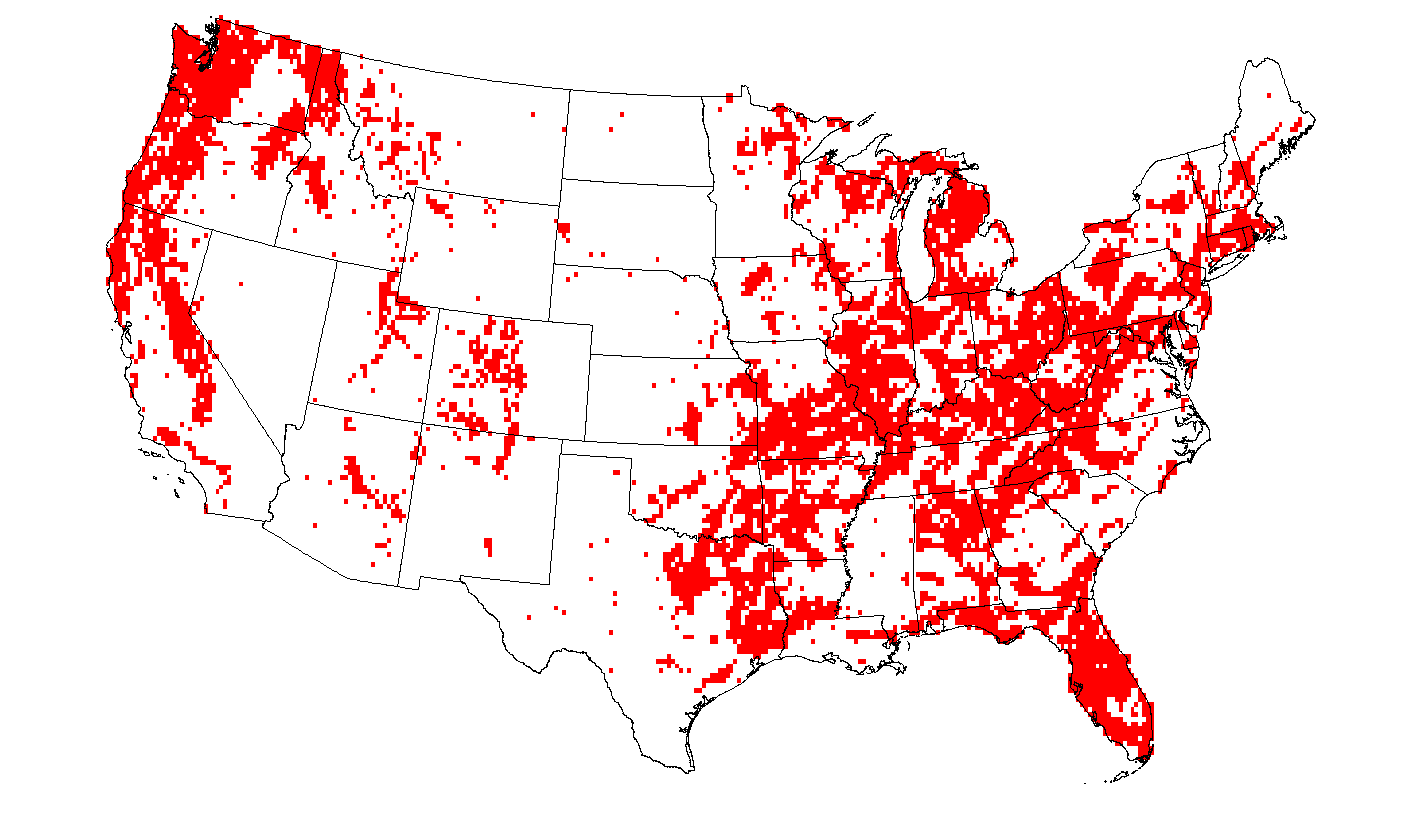
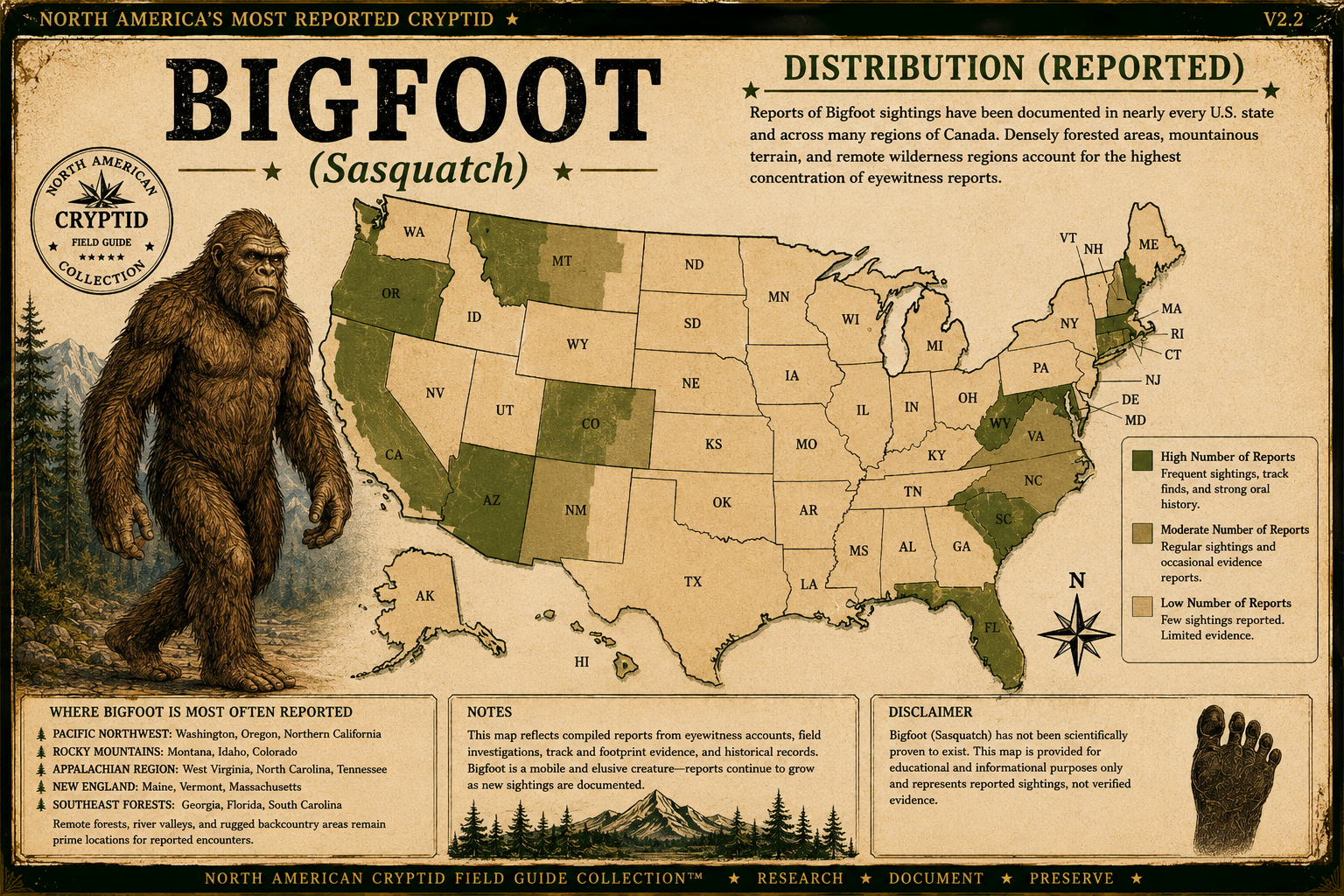
The map highlights regions where Bigfoot sightings have been reported over many decades. Darker concentrations represent areas with a greater number of documented reports, while lighter regions indicate fewer reported encounters. Population density, public interest, access to wilderness, and reporting habits all influence where sightings are recorded, so the map should be viewed as a visualization of reported activity rather than evidence of a confirmed population.Several regions consistently appear throughout North American Bigfoot literature:
- Pacific Northwest – Washington, Oregon, and Northern California remain the most frequently reported region, with dense conifer forests and vast wilderness areas providing classic Bigfoot habitat.
- Rocky Mountains – Idaho, Montana, Colorado, and neighboring states continue to produce reports from remote mountain valleys and heavily forested backcountry.
- Appalachian Mountains – Stretching from Alabama to Pennsylvania, the Appalachians account for thousands of eyewitness reports and generations of local folklore.
- Upper Midwest – Michigan, Wisconsin, Minnesota, and surrounding states have produced numerous reports from extensive forests, lakes, and public lands.
- Southeastern Forests – Florida, Georgia, Mississippi, Louisiana, and neighboring states have long histories of reports, often describing large, dark-haired creatures inhabiting swamps and bottomland forests.
Because reports are continually submitted by hikers, hunters, campers, and outdoor enthusiasts, the distribution map should be viewed as a living snapshot rather than a final record. As new information becomes available, reported hotspots may expand, shift, or reveal previously overlooked regions.
Regional Hotspots
Pacific Northwest
The birthplace of modern Bigfoot lore, featuring vast old-growth forests, rugged mountains, and thousands of square miles of remote wilderness.Appalachian Mountains
One of North America's richest regions for Bigfoot folklore, with reports stretching from Alabama through Tennessee, Kentucky, West Virginia, and Pennsylvania.Rocky Mountains
Remote forests, alpine terrain, and expansive public lands continue to generate reports throughout Montana, Idaho, Colorado, and Wyoming.Southern Bottomlands & Swamps
Florida, Louisiana, Mississippi, Georgia, and eastern Texas remain active areas for sightings, often describing large, dark-haired creatures inhabiting wetlands and dense forests.
Shop our Cryptid Collection and SAVE